Foods and Nutrients Linked to Lung Health
Quick answer
People who eat more fruit and vegetables tend to have lower rates of COPD, asthma and wheezing in observational studies. That is encouraging, but it doesn’t prove the food itself is the cause, and trials are small and mixed. No single food “cleanses” or repairs the lungs. A varied diet rich in fruit, vegetables, whole grains and fiber is a sensible part of looking after your lungs, alongside not smoking.
“Best foods for your lungs” lists are everywhere, often promising that ginger, turmeric or a special juice will clean out your lungs. The real research is more modest and more interesting. This guide explains what studies have found, why most of it can’t prove cause and effect, and how to put it into practice without falling for miracle-food claims.
What the research has looked at Foods for lung health
Fruit and vegetables
Most of the evidence comes from observational studies, which follow large groups of people and compare what they eat with their health over time.
- A 2014 systematic review and meta-analysis in Nutrition Reviews pooled 42 studies and found that people with the highest fruit and vegetable intake had a lower risk of asthma and wheezing than those with the lowest intake.
- A 2025 meta-analysis presented in the Proceedings of the Nutrition Society found higher fruit intake was linked to about 17% lower odds of COPD and higher vegetable intake to about 24% lower odds, with higher fruit fiber also linked to lower COPD risk.
These are associations. They show a pattern, not proof.
Fiber, fish and specific nutrients
Researchers have also looked at fiber, fish and omega-3 fats, and antioxidant vitamins such as C and E. A 2022 systematic review in Nutrition Reviews on diet and lung function in COPD found that data on diet quality and lung function decline were limited and inconsistent. The clearest signal it reported was for vitamin D supplementation in people with COPD, which is a question for your doctor rather than a reason to self-prescribe.
Why “linked to” isn’t the same as “causes”
People who eat a lot of fruit and vegetables are also more likely to be non-smokers, more active and better off financially, and all of those things affect lung health too. Researchers try to adjust for these differences, but they can’t remove them completely. Under US advertising rules, the Federal Trade Commission generally doesn’t treat observational studies on their own as enough to back up a health claim for a product, which is another reason to be wary of “lung foods” marketing.
Trials that actually change people’s diets are fewer, smaller and shorter. Some suggest benefits, especially over longer periods, but the overall picture isn’t settled.
Myths about “lung-cleansing” foods
- “This food clears tar from your lungs.” No food removes tar. Your lungs clean themselves with mucus and cilia once you stop smoking.
- “Detox juices flush out toxins.” The NIH’s complementary health center notes there is little good evidence for detox diets, and unpasteurized juices can carry a risk of food poisoning.
- “One superfood protects you from smoking damage.” No diet cancels out the harm from smoking. Quitting matters far more.
Ginger, turmeric, garlic, green tea and similar foods can be part of a healthy diet. That is different from claiming they cleanse or repair your lungs.
A practical, lung-friendly way to eat
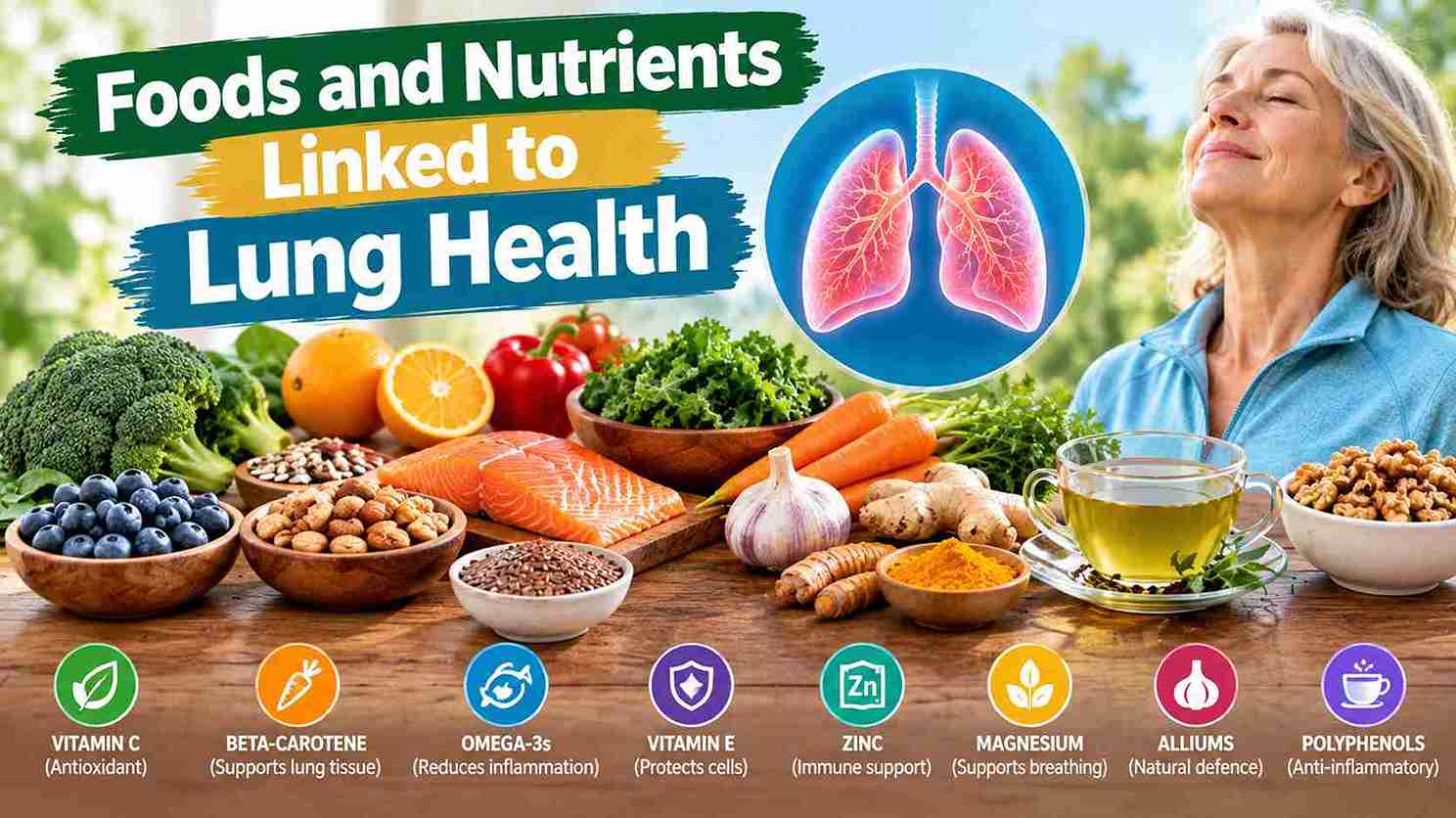
There is no special “lung diet”. The American Lung Association suggests adding antioxidant-rich foods, such as vegetables, berries and beans, and eating a variety of vitamins and nutrients. In practice, that looks like:
- Fill half your plate with vegetables and fruit, and vary the colors through the week.
- Choose whole grains, beans and lentils for fiber.
- Include fish a couple of times a week if you eat it, plus nuts and seeds.
- Cut back on heavily processed foods and sugary drinks.
- Drink enough water through the day as part of a balanced diet.
If you have COPD, asthma or another lung condition, your needs may be different. Some people with COPD find large meals make breathing harder, or struggle to keep weight on. A doctor or registered dietitian can give advice that fits you.
Food first, supplements second
It is tempting to swap food for a pill. Antioxidant and vitamin supplements don’t come packaged with the fiber and hundreds of other compounds in whole foods, and high doses aren’t always safe. Talk to your doctor before taking supplements, especially if you have a lung condition or take medication. Our guide to common lung support ingredients looks at what the evidence says about individual nutrients and herbs.
When to get help now
Call 911 (US) or 999 (UK) for severe breathlessness, chest pain, coughing up blood, or blue or gray lips. See a doctor soon for a cough lasting more than 3 weeks, breathlessness doing normal things, or wheezing.
Frequently asked questions
Sources
- Seyedrezazadeh E, et al. Fruit and vegetable intake and risk of wheezing and asthma: a systematic review and meta-analysis. Nutrition Reviews. 2014;72(7):411-428. doi:10.1111/nure.12121
- Stent RA, et al. The influence of fruit and vegetable intake on chronic obstructive pulmonary disease respiratory outcomes and risk: a systematic review and meta-analysis. Proceedings of the Nutrition Society (abstract), published online May 21, 2025. Cambridge Core
- Nutrition as a modifiable factor in the onset and progression of pulmonary function impairment in COPD: a systematic review. Nutrition Reviews. 2022;80(6):1434-1444. Read the published review
- American Lung Association. Can You Detox Your Lungs? (updated October 23, 2025).
- National Center for Complementary and Integrative Health (NIH). “Detoxes” and “Cleanses”: What You Need To Know (March 2025).
- Federal Trade Commission. Health Products Compliance Guidance (December 2022).