How Long Do Lungs Take to Recover After Quitting Smoking?
Quick answer
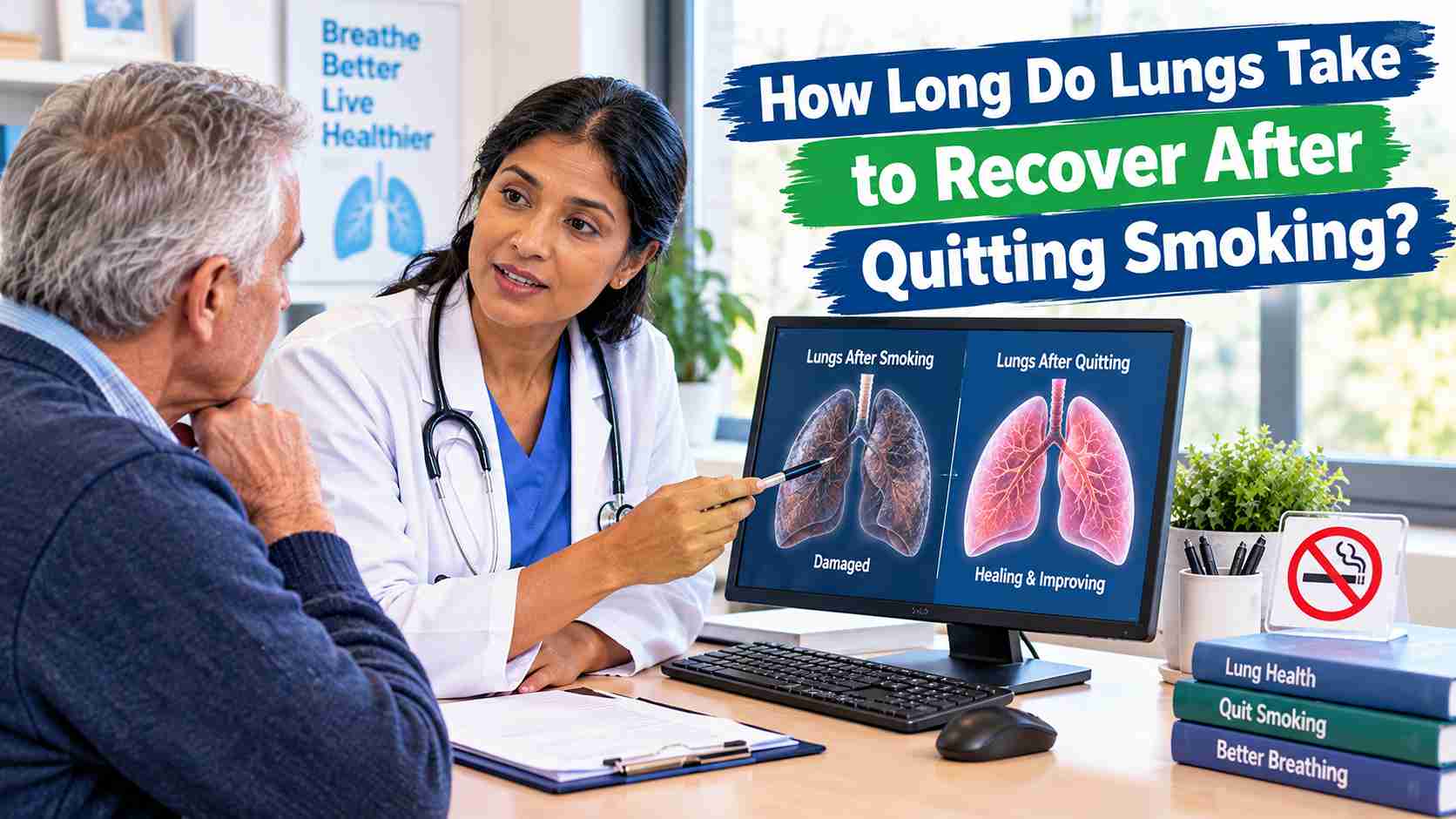
Your body starts recovering within minutes of your last cigarette. According to the American Cancer Society, coughing and shortness of breath typically ease within 1 to 12 months, and lung cancer risk falls to about half that of someone who still smokes after 10 years. Some damage, such as emphysema, does not reverse, but quitting slows further decline at any age.
If you have just quit, or are thinking about it, it is natural to wonder how long it takes for your lungs to “come back”. The honest answer is that recovery happens in stages over many years, some changes are fast and noticeable, and some damage is permanent. This guide sets out what typically happens, based on the American Cancer Society and the CDC, and what you can do to help.
Try our free tool
Enter your quit date in the quit-smoking recovery timeline to see how long you’ve been smoke-free and which milestones you have typically reached.
The recovery timeline – Lung recovery after quitting smoking
The American Cancer Society publishes this timeline of benefits after quitting (last revised May 23, 2025). These are typical averages, not guarantees. How much and how long you smoked, your age and your overall health all make a difference.
| Time after quitting | What typically happens |
|---|---|
| A few minutes | Your heart rate drops. |
| 24 hours to a few days | Nicotine levels in your blood drop to zero. The carbon monoxide level in your blood drops to normal. |
| 1 to 12 months | Coughing and shortness of breath decrease. |
| 1 to 2 years | Your risk of heart attack drops sharply. |
| 5 to 10 years | Risk of cancers of the mouth, throat and voice box is cut in half. Stroke risk decreases. |
| 10 years | Lung cancer risk is about half that of a person who still smokes. Risk of bladder, esophagus and kidney cancer decreases. |
| 15 years | Risk of coronary heart disease is close to that of a nonsmoker. |
| 20 years | Risk of several cancers, including mouth, throat, voice box and pancreas, drops to close to that of someone who does not smoke. |
You may see other timelines online that mention “12 hours” or “1 to 9 months”. Many copy an older version of this list. We use the current one.
What happens in your lungs after you quit
The first weeks and months
Cigarette smoke irritates the airways, increases mucus and damages the tiny hair-like cilia that sweep mucus out of the lungs. Once you stop, that constant irritation ends. The American Lung Association describes the lungs as self-cleaning organs that begin to heal once they are no longer exposed to pollutants. Many people find everyday activities, such as climbing stairs, leave them less out of breath, and the American Cancer Society lists this among the benefits you may notice.
The long term
The biggest gains are long-term. Quitting lowers your risk of lung cancer and other cancers year after year. According to the CDC, quitting also reduces the risk of developing chronic obstructive pulmonary disease (COPD), and in people who already have COPD it slows the disease and reduces the loss of lung function over time.
What doesn’t fully recover
It is important to be realistic. Some smoking damage is permanent:
- Emphysema, where the tiny air sacs are destroyed, does not grow back.
- COPD doesn’t go away after quitting, but quitting slows how fast it gets worse.
- Cancer risk falls a lot but may stay somewhat higher than in people who never smoked.
That is not a reason to give up. The CDC notes that quitting benefits everyone who smokes, whatever their age and however long or heavily they have smoked.
How to support your recovery
- Stay quit. Relapse is common, and many people try several times before quitting for good. Free help: call 1-800-QUIT-NOW (1-800-784-8669) or visit Smokefree.gov for apps, text programs and a quit plan.
- Don’t switch to vaping for “lung recovery”. E-cigarettes still expose your lungs to aerosol. If you use them to quit, talk to a doctor or quitline counselor about a plan to stop those too.
- Avoid secondhand smoke and other smoke, including wood smoke and smoke from cooking without ventilation.
- Get moving. Regular activity, built up gradually, helps your overall fitness. If you get breathless easily, ask your doctor first.
- Practice breathing exercises. Pursed-lip and belly breathing can help some people control breathlessness. See our breathing exercises guide or try the guided breathing exerciser.
- Keep vaccines up to date. Ask your pharmacist or doctor about flu, pneumonia and COVID-19 vaccines.
- Eat well. See what the research says about foods linked to lung health.
Do you need lung cancer screening?
If you are 50 to 80 and smoked heavily, you may qualify for a yearly low-dose CT scan. In the US, screening is recommended for people with at least a 20 pack-year smoking history who smoke now or quit within the past 15 years. Work out your pack-years with our pack-year calculator and talk to your doctor.
What about “lung detox” supplements?
There is no good evidence that any supplement speeds up lung recovery or removes tar. Quitting and medical care matter far more. Read do lung detox supplements work? and supplements after quitting smoking: what the evidence says.
When to see a doctor
See your doctor if, after quitting, you still have a cough that lasts more than 3 weeks, wheezing, breathlessness that is getting worse, chest infections that keep coming back, or unexplained weight loss. Don’t assume symptoms will clear on their own, and tell your doctor about your smoking history.
When to get help now
Call 911 (US) or 999 (UK) for severe breathlessness, chest pain, coughing up blood, or blue or gray lips. See a doctor soon for a cough lasting more than 3 weeks, breathlessness doing normal things, or wheezing.
Frequently asked questions
Sources
- American Cancer Society. Health Benefits of Quitting Smoking Over Time (revised May 23, 2025).
- Centers for Disease Control and Prevention. Health Effects of Cigarettes: COPD.
- Centers for Disease Control and Prevention. Smoking and Respiratory Disease: What Health Care Professionals Need to Know.
- American Lung Association. Can You Detox Your Lungs? (updated October 23, 2025).
- Smokefree.gov (National Cancer Institute). Speak to an Expert.
- US Preventive Services Task Force. Lung Cancer: Screening (March 9, 2021).